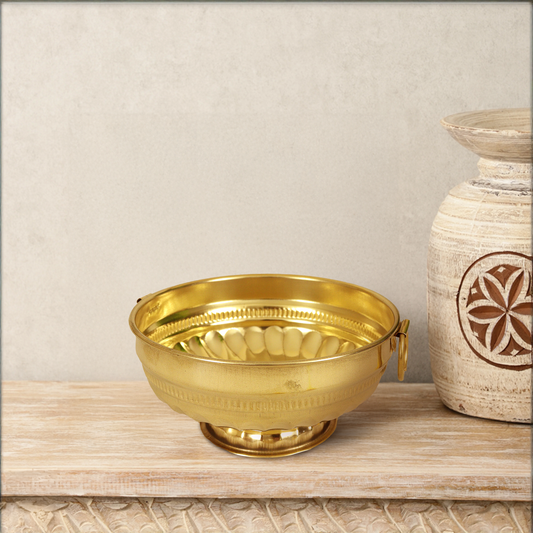
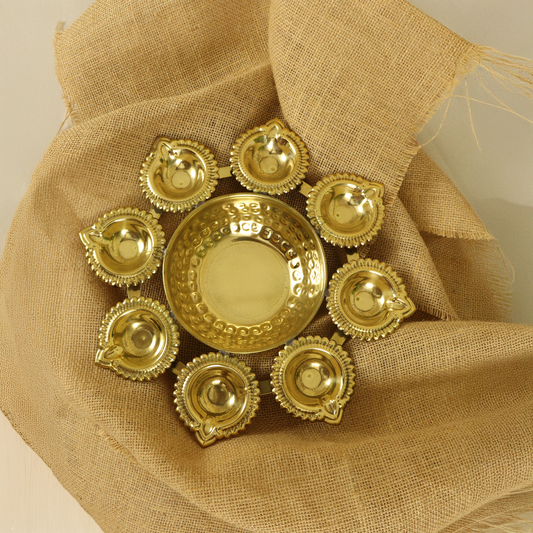
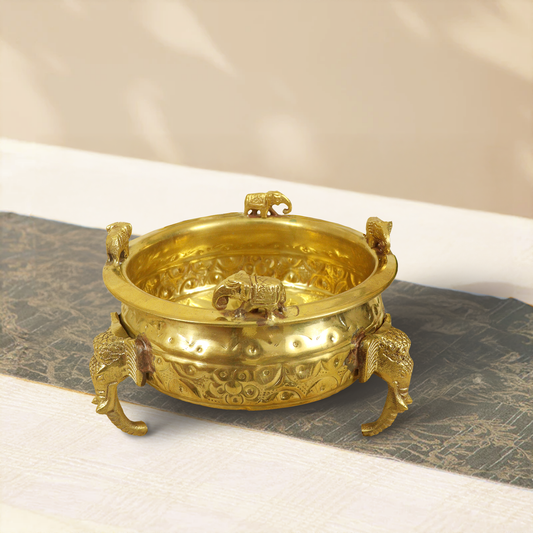
In Indian tradition, open water vessels are associated with purity, prosperity, and positive energy flow. These forms are commonly placed near entrances, prayer areas, and festive settings to enhance spiritual ambience while maintaining aesthetic grace.
Such vessels are closely linked with Mahalakshmi pooja, where water, fragrance, and natural elements symbolise abundance and stability. While not limited to a single deity, they are most often associated with Goddess Lakshmi due to their connection with wealth, nourishment, and auspicious beginnings.
During special observances, devotees often place divine figurines within these vessels to perform focused worship. You may add sacred
god idols
inside the vessel for deity-specific rituals, especially during Fridays, festivals, or housewarming ceremonies.
How to perform pooja using a decorative water vessel:
Place the vessel on a raised base such as a traditional
chowki,
fill it with clean water, add flowers or herbs, and light
traditional lamps
nearby. This setup is commonly followed during Mahalakshmi pooja, Varalakshmi Vratham, and festive preparations.
What can be added inside for spiritual significance:
Natural aromatic elements such as pachai karpooram, turmeric, vetiver, rose petals, and rose water are traditionally used. Sacred fragrances like
javadhu powder
and other
ritual fragrances
help enhance focus and spiritual calm.
These vessels are often paired with soft illumination using traditional oil lamps, creating a calm and sacred visual flow that supports meditation and devotional practices.
Beyond worship, these pieces are widely used as décor accents during festivals, weddings, and cultural celebrations—reflecting refinement, hospitality, and spiritual mindfulness.
Choose symbolic water decor that blends tradition, devotion, and timeless design.
FAQs – Traditional Water Decor Collection
Q1. What is the traditional purpose of an urli in Indian homes?
It is used to invite prosperity, maintain positive energy flow, and enhance spiritual and visual balance within the home.
Q2. What does an urli symbolise in spiritual and cultural practices?
It symbolises abundance, purity, hospitality, and auspicious beginnings, especially in Lakshmi-related observances.
Q3. Which materials are traditionally used to craft an authentic urli?
Traditional urlis are commonly crafted using brass, chosen for durability, ritual compatibility, and cultural significance.
Q4. What is the ideal placement for an urli inside the home?
They are usually placed near entrances, in prayer areas, living spaces, or festive setups to support positive energy flow.